Pulse — Healthcare
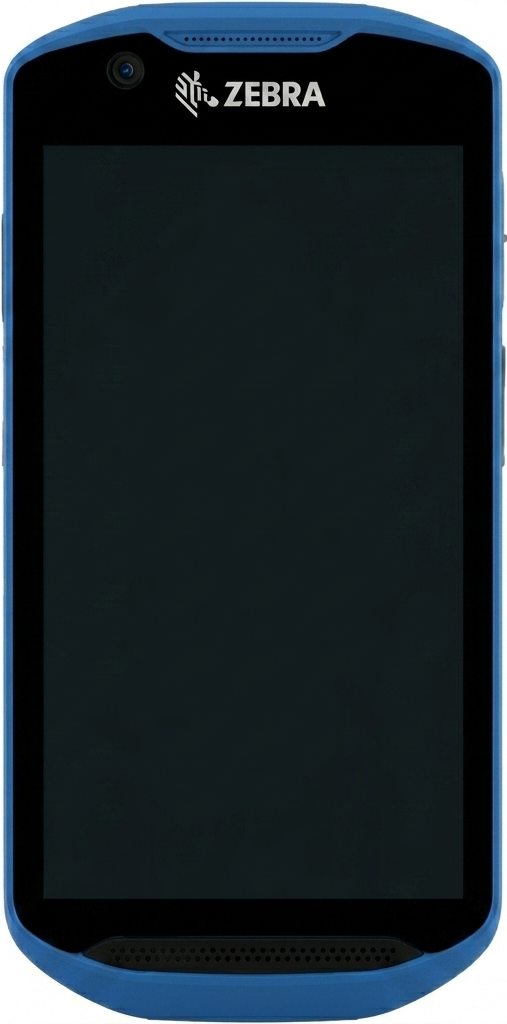
A workforce operating system for the rugged Zebra TC52 — predicting patient deterioration six hours ahead and coordinating care teams at the speed of the floor.
Pulse
CLINICAL WORKFLOW · NURSING
Regional Medical Center · v4.2.1
Project Overview
Most customers buy the TC52 handheld for one job — scan a wristband, scan a med, done — and then the device sits in a charger for the rest of the shift. Our customer-success data kept showing the same thing: high adoption for scanning, near-zero adoption for everything we shipped on top.
Pulse started as an internal initiative to change that. Instead of pitching more features, we embedded with a pilot hospital's night shift for 14 weeks on Ward 4B to figure out what the TC52 should actually do between scans — and shipped a workforce OS spanning 26 screens and three phases of AI.
Pulse
CLINICAL WORKFLOW · NURSING
Regional Medical Center · v4.2.1
The first second of the app — Pulse mark, hospital name, and a quiet loading state while the device pulls the user's shift context.
Nurse taps Pulse on the TC52 home screen at clock-in. Loads in under a second so it feels instant, not like another slow hospital tool.
Sets the tenant (which hospital, which unit) before login, so we don't ask the nurse anything we already know.
Welcome back
Sign in to view your shift assignments
Help desk · ext. 4040
Tap-to-badge SSO with employee ID fallback. No long passwords, no email field — built for gloved hands and shared devices.
At shift start the nurse taps their badge to the back of the TC52. If the badge fails, they punch in a 6-digit ID.
Removes the 30–60 seconds nurses lose to password resets, and keeps HIPAA-grade auth without slowing the floor down.
My Role in the Project
I owned design end to end: floor research, sketches, Figma prototypes, the full UI, contributions to our internal Mobility DNA tokens, and handoff to the Android team. The PM ran customer comms, two engineers built it, and our clinical SME — a former ICU nurse on our staff — kept me honest about workflow.
A lot of the job was unglamorous: negotiating with hospital IT to side-load past their MDM, re-shooting reference photos because the first batch were all right-handed, and sitting through 11 p.m. staffing huddles so I'd design for the floor that existed, not the one I imagined.
Challenges Encountered
- →The TC52 is a 5" screen wrapped in a thick rubber bumper — iPhone-sized tap targets don't survive a gloved thumb.
- →Staff use it one-handed, almost always while holding something else: a chart, an IV bag, a phone for a doctor.
- →Every tap is audited. The usual undo patterns weren't available to soften mistakes.
- →Alert fatigue wasn't about volume — a low telemetry battery and a deteriorating patient looked identical on the device.
- →Handoffs were wildly inconsistent. The incoming shift quietly redid a lot of triage as a result.
- →Trust gap: the hospital had been burned by a previous charting rollout and Zebra was the company that made the device staff resented carrying.
User Research Approach & Insights
I spent two weeks shadowing eight nurses across three wards, plus two night shifts I'd rather not repeat. Six handoffs observed, four contextual interviews with charge nurses, and a one-week diary study with twelve staff. I also pulled six months of anonymized device telemetry from our own backend — which app was open, for how long, where the device was physically docked — and that turned out to be as useful as anything I heard in person.
Methods
- Contextual inquiry: shadowed 8 nurses across 3 wards (incl. 2 night shifts).
- Semi-structured interviews: 4 charge nurses, 6 floor RNs.
- Diary study: 12 staff over one week.
- Telemetry analysis: 6 months of anonymized device usage.
- Stakeholder workshops with the clinical SME and Mobility DNA team.
Key Findings
- →One charge nurse spent 12 minutes hunting a float RN who was "on shift" — gave up and paged overhead.
- →A nurse's personal notebook was more trusted than the official handoff tool.
- →Alert fatigue was a hierarchy problem, not a volume problem.
- →Staffing was reactive — "we need help" came an hour late.
- →Nurses didn't want AI. They wanted fewer steps. "Smart" had to earn it in two uses.
Ideation Process
Floor shadowing, charge-nurse interviews, telemetry audit.
Crazy 8s, journey maps, an effort/impact roadmap.
Paper TC52 frames, one-thumb reach studies.
Figma flows wired to a TC52 emulator on real hardware.
Gloved-hand tap testing, on-floor pilot with 6 nurses.
Reordered actions, tuned contrast, killed three features.
The Solution Implemented
Design standards
- 44px minimum tap targets, 56px for anything destructive or time-sensitive — above Mobility DNA defaults, because gloves.
- Calm palette — soft lavender to sky. Wards are visually loud; the app should feel like a deep breath, not another alarm.
- Every AI suggestion is editable, attributable, and easy to ignore.
Three phases layered on a core workforce app
- Core: tasks + scanning
- Phase 1: shift-summary / alert triage / staffing forecasts
- Phase 2: prediction + voice agent + command center
Core Experience
Tasks, scanning, and the foundation everything else sits on.
Good morning
Emma Chen, RN
● On shift · Ward 4B
Code Blue · Room 412
Cardiac arrest · 2 min ago · 3 responders
Active Tasks
3 due12
Staff on floor
Live8/14
Staffing suggestion
Charge nurseReassign 2 cardiology tasks to James Patel, RN — workload balanced and ACLS-certified.
Today's census
View all7:00 AM – 7:00 PM
68% occupancyFRI
21
Next shift · ICU nights
7:00 PM – 7:00 AM · with Dr. Patel
The shift cockpit. Open alerts, today's workload, and a short AI read on what needs attention next — all above the fold.
Nurse opens this every time they unlock the device. It's the home base they come back to between rooms.
Replaces the mental juggling of pager + whiteboard + EHR tabs with one calm view of 'what matters right now'.
My tasks
12 active · 3 due today · 1 overdue
Administer insulin · Walker, R.
Pre-op vitals · Martinez, J.
Wound dressing change · Lee, S.
Medication reconciliation · 4B
Restock supply cart 4
A personal task list color-coded by urgency, with a clear sense of what's done, what's in progress, and what's overdue.
Nurses check between patient rounds; charge nurses glance at it to see how a teammate's shift is tracking.
Ends the 'sticky note on the COW' workflow. Nothing falls through the cracks at handoff.
New task
Dictate, type, or a template
Priority
Assign to
Sarah Kim, RN
Cardiology · Available · Ward 4B
Due
Today, 11:30
Patient
Walker, R. · 412B
Attachments
Add a task in seconds using voice dictation, a quick photo, or a tap. Pulse suggests the right assignee based on skills and location.
A nurse spots a spill or a missing supply, dictates it on the go, and Pulse routes it to the nearest qualified hand.
Cuts the friction of 'who do I call for this?' — the request gets to the right person without a phone tree.
Find staff
14 on shift · 8 available now
Availability · next 12 hours
07:00 – 19:00Sarah Kim, RN
Cardiology · Ward 4B
James Patel, MD
Emergency · ED bay 3
Aisha Lopez, RN
ICU · Ward 6
Marcus Webb, CNA
Med-Surg · Ward 3A
Linh Tran, RN
Pediatrics · Ward 5
Search staff by skill, role, or certification with a live heatmap of where they are on the unit.
Charge nurse needs an IV-certified RN now — types 'IV', sees who's available and closest.
Replaces the 12-minute walk-and-ask hunt for a specific clinician.
Floor 4B
Live staff and bed status
Live · 5 staff
10 of 10 beds
Nearest available
Sarah Kim, RN
Rm 408 · ACLS · 12 m walk
A floor-plan view of the unit showing rooms, staff positions, and who's free vs. tied up.
When a code or a rapid response hits, the charge nurse opens the map and sees who can move first.
Gives the unit a shared sense of 'where is everyone right now' without anyone having to radio in.
Pulse Assist
Ask about staff, patients, shifts
Three cardiology staff are available between 10:30 and 12:30:
Sarah Kim, RN
Available now · Ward 4B
David Cho, MD
Free in 25 min · Clinic
Maya Singh, NP
Available · Cath Lab
Just now · from staff roster
4 active alerts across 12 ICU beds:
- ● Rm 412 · BP drop, rapid response active
- ● Rm 408 · SpO₂ 91%, monitoring
- ● Rm 403 · Pain score 7, PRN due
- ● Rm 410 · Lab results posted
A chat thread with the Pulse AI — ask for a patient summary, request a task, or look up a policy in plain English.
Nurse types 'summarize bed 12 since last shift' while walking to the room.
Pulls answers out of the EHR without forcing the nurse to dig through tabs on a 5-inch screen.
Listening
"Assign medication review to Sarah"
Captured
Task: Medication review
Assigned to: Sarah Kim, RN · Cardiology
Priority: High · Due in 30 min
Push-to-talk voice input with a live transcript. Designed for moments when both hands are occupied.
Mid-procedure, the nurse holds says 'Hey Zebra, log 250 mL output for room 8'.
Lets clinicians document in the moment instead of stacking up charting for the end of shift.
Inbox
7 new alerts · 2 critical
Now
Code Blue · Room 412
2mCardiac arrest · 3 responders en route
Medication due · Walker, R.
8mInsulin lispro 10u SC · window closes in 8 min
Earlier today
Shift handoff in 30 min
30mReport to night team · ICU floor
Hospital-wide announcement
1hUpdated PPE protocol effective tomorrow
Task completed by Sarah Kim, RN
2hPre-op vitals · Martinez, J.
Lab results posted · Chen, M.
3hTroponin within normal limits
All alerts in one place, grouped by urgency rather than time — critical at the top, FYI at the bottom.
After a long room visit, the nurse opens this to triage what came in while they were away.
Fixes alert fatigue: instead of 40 dings, the nurse sees the three things that actually need a decision.
Announcements
From hospital leadership
Quarterly town hall · Q3 results and 2026 plan
Dr. Eleanor Briggs, CMO · Recording available
Updated hand hygiene audit schedule
Infection Prevention
Nurses Week luncheon · Friday, 12:00
HR Engagement
Code Silver drill · Building C, 15:00
Security Office
New cardiac monitors deploying next week
Cardiology
A clean feed for unit and hospital-wide announcements with images, video, and acknowledgements.
Manager posts a new isolation protocol; staff read and tap to acknowledge during a break.
Replaces the printed huddle sheets and forwarded emails nobody reads.
Patient wristband
METRO GENERAL
CHEN, MARCUS
DOB 04/12/1968 · MRN 408192
Align wristband within frame
Manual entry
Uses the TC52's barcode scanner to read a patient wristband and pull up that patient instantly.
Before any med pass or procedure, the nurse pulls the trigger and scans the wristband to confirm identity.
Hard-stops wrong-patient errors — the single biggest source of preventable harm in med admin.
Walker, Robert
M · 67 y · MRN 4827193 · DOB 14/03/1958
BP
128/82
HR
76
SpO₂
94%
Temp
99.1°
Heart rate · last 6 hours
Active medications
Metoprolol 25 mg PO BID
Next: 12:00
Atorvastatin 40 mg PO QHS
Next: 21:00
Insulin lispro 10 u SC
Due in 8 min
A patient summary built for a 5-inch screen: latest vitals, active meds, allergies, and recent notes — no horizontal scrolling.
Opens straight from a scan or alert. Nurse reads it on the way into the room.
Replaces the 'open the EHR on a workstation' detour for the 80% of lookups that are quick checks.
Assignment rationale
Why this nurse was suggested
Suggested for
Emma Mason, RN
Task: Post-op cardiac assessment
Criteria met
Matching criteria
ACLS and PALS certified
100%On-shift, available within 15 min
92%Current workload 38% — lowest on unit
86%No active medication-error flags
96%Prior care for this patient (3 shifts)
74%Handoff risk
Emma's shift ends in 2 h 40 min. Plan a handoff before assigning.
Shows why the AI recommended what it did — the top factors, the confidence level, and what data it used.
When Pulse flags a patient as deteriorating, the nurse taps 'why?' and sees the three vitals trends behind the call.
Builds the trust clinicians need to act on AI. Without this, nurses (rightly) ignore the model.
Analytics
Cardiology · this week
Task completion
94%
+3.2%Avg response time
2.4m
−18%Staff utilisation
Sarah Kim, RN
James Patel, MD
Aisha Lopez, RN
Marcus Webb, CNA
Linh Tran, RN
Patient alerts by hour
3 criticalStaffing note
Aisha has been at 95% utilisation for 3 days. Consider redistributing her caseload.
Personal and unit-level analytics — task throughput, alert response times, time-on-feet trends.
Nurses check their own numbers at end of shift; managers use it for weekly huddles.
Turns gut-feel about workload into something you can actually point at and fix.
Emma Chen, RN
BSN · ACLS · PALS
247
Tasks this wk
96%
On-time rate
4.9
Peer feedback
This week
Shifts completed
5 of 5Certifications and training
3 expire within 90 days
Shift preferences
Days · 12-hour
Notification settings
Critical only
Privacy and audit log
HIPAA access log
The nurse's own page — certifications, shift history, notification preferences, and accessibility settings.
Updated when someone earns a new cert or wants to silence non-critical alerts on night shift.
Keeps the system's picture of each nurse accurate so smart-assign and alert routing actually work.
Phase 1 · Fastest ROI
Shift-summary, handoff, alert ranking, and staffing forecasts.
Shift summary
AI Nurse Copilot · 7a – 7p
Copilot ready
12 patients · 18 events ingested
Output · Marcus Chen, Rm 412
Status
Patient stable throughout shift.
Labs
Troponin pending (drawn 14:22).
Vitals
BP within range. HR 78 avg.
Pain
No chest pain reported since 09:00.
Plan
Cardiology recommends continued monitoring.
Generated in 1.2 s · GPT-4o · grounded on 18 chart events
An auto-generated recap of the nurse's shift in SBAR format — situation, background, assessment, recommendation.
Nurse opens this at the end of shift, edits anything that's off, and ships it to the next RN.
Saves 15–20 minutes of writing per shift and makes handoffs more consistent across the unit.
Shift handoff
Auto-built SBAR · ready to send
Marcus Chen
M · 58 · Rm 412 · Telemetry
Situation
Telemetry monitoring post-ED arrival for atypical chest pain.
Background
58y M, HTN, prior NSTEMI 2023. Recent chest pain x2 episodes today.
Assessment
Stable vitals. ECG no acute ST changes. Pain free since 09:00.
Recommendation
Continue telemetry. Await troponin. Page cardio if >0.04.
Takes the shift summary one step further: assembles a per-patient handoff packet ready to read out loud.
During shift change, the outgoing nurse walks the room with their TC52 and reads from this.
Fixes the inconsistent, memory-based handoffs that are the root cause of many sentinel events.
Alerts
AI ranked · 15 → 3 actionable
Noise reduced 80%
12 duplicates merged · 3 deferred
Critical now
· 1Room 412 · Cardiac arrest
Code Blue · 30s ago
High priority
· 2Telemetry review overdue · Rm 402
Due 8 min ago
Insulin recheck · Walker, R.
Sliding scale due
Can wait
· 2Policy update · Infection control
For review by EOD
Cart 4 restock
Threshold reached
Re-ranks incoming alerts based on patient context, history, and current acuity — collapses noise into a short action list.
Replaces the raw alarm feed as the default notification view for floor nurses.
Alarm fatigue. Nurses stop ignoring the screen because what's on it is actually worth looking at.
Staffing forecast
Next 12 hours · 89% confidence
ER shortage likely · 5p – 8p
Predicted: 2 trauma-certified RNs short
Demand vs capacity
Recommended actions
Call in 2 trauma RNs from float pool
-72% shortage risk
Extend Sarah Kim's shift by 4h
-31% shortage risk
Defer 3 elective admits to Saturday
-18% shortage risk
A 12-hour forward forecast of unit demand by hour, with a confidence band and the drivers behind it.
Charge nurse and house supervisor use it at huddles to decide on float pulls and break coverage.
Moves staffing from reactive ('we're drowning') to proactive ('let's pull one float at 2pm').
Phase 2 · Differentiator
Prediction, autonomous tasks, and clinical voice agent.
Clinical risk
Marcus Chen · Rm 412 · refreshed 2m ago
72
/100
Deterioration likely within 4 h
+18 pts since 06:00
Top contributors
HR trend rising
82 → 104 over 3h
SpO₂ variability
σ 2.1 → 4.8
Recent cardiac alert
PVC run · 14:02
Suggested actions
Repeat vitals in 30 min
Notify charge nurse
Confirm cardiology consult ETA
An early-warning view that scores each patient's risk of deteriorating in the next 6 hours, with the trends driving the score.
Charge nurse scans this every couple of hours; rapid response teams use it on their rounds.
Catches the silent declines that today only show up once vitals crash.
Auto-tasks
AI creates · you approve
New order detected
Troponin · Chen, M · 14:22
Blood draw · Rm 412
Assign nearest phleb
Lab follow-up
Watch result · auto-page if >0.04
Notify Dr. Patel if elevated
Pager + SMS
Document in chart
Auto-template SBAR
Saves ~7 min per order · 142 tasks auto-created this week
When the AI sees a pattern that needs action — a missed turn, a due med — it drafts a task and waits for a one-tap approval.
Nurse reviews proposed tasks at the start of shift and at natural pauses through the day.
Closes the gap between 'the EHR knows' and 'someone actually did the thing'.
Clinical voice
HIPAA · on-deviceYou
"Hey Zebra, assign telemetry review to nearest cardiology-certified nurse."
Pulse · executed
Assigned Sarah Kim, RN · ACLS · 12 m from Rm 402. Pager sent.
You
"Hey Zebra, summarize Room 402."
Pulse · speaking
"Stable. Troponin pending. No chest pain. Telemetry active."
Tap to interrupt · "Hey Zebra" to wake
A conversational agent that can run multi-step actions — log vitals, place a request, summarize a chart — entirely by voice.
Nurse, hands full at the bedside, says 'Hey Zebra, log BP 142 over 88 for this patient and flag the on-call'.
Removes screen-time from the bedside. The nurse stays with the patient, not the device.
Phase 3 · Enterprise
Command center, executive briefings, and resource optimization.
Shift command
Charge view · live ops
ICU → 97% workload by 6 PM
Threshold breach in 3h 12m
Recommended actions
Move 1 float RN (Ward 4B → ICU)
Reassign Rm 402 telemetry review
Delay non-urgent wound checks
Expected improvement
-18% response time
Unit pulse
ICU
97%
ER
84%
4B
62%
PCU
71%
A house-wide live view of every unit's load, staffing gaps, and active escalations — built for charge and house supervisors.
House supervisor keeps this open on a tablet at the desk and on their TC52 when walking.
Replaces the whiteboard and the four phones it takes to keep a 200-bed hospital coordinated.
Hospital pulse
Week 25 · executive briefing
For
Dr. Helen Voss · CNO
Strong week overall. Floor responsiveness improved, but ICU staffing pressure builds toward Friday.
Response times
-14%
vs last wk
Task completion
+9%
4,218 closed
ICU staffing
92%
threshold near
Patient sat.
4.7
+0.2
Forecasts
ER overload predicted
Friday 5p – 9p
ICU near staffing threshold
Thu – Sat
Elective surgery surge
Next Mon
Top recommendation
Increase float pool by 2 staff next week. Projected ROI: -$48K overtime.
A weekly auto-generated briefing for the CNO and C-suite: throughput, safety events, staffing health, and what changed.
Monday morning read for nursing leadership before their ops meeting.
Turns a dashboard nobody opens into a short narrative leaders actually read and act on.
Resource optimization
Hospital-wide · live
$142K saved this month
+11% bed utilization · -23% agency spend
Live rebalancing
1 RN
ICU census spike
2 beds
Surgery delayed 2h
1 trauma RN
Predicted surge 5p
Optimization targets
Bed utilization
87 / 92
OR turnover (min)
24 / 18
Avg LOS (days)
4.2 / 3.8
Float-pool yield
78 / 85
Suggests moves — float nurses, equipment, beds — to rebalance the house when one unit spikes.
House supervisor reviews suggestions at shift change and accepts the ones that make sense.
Stops one unit drowning while another sits quiet, without endless cross-floor phone calls.
Results & Impact
Six-week pilot on Ward 4B.
Daily active time on TC52 outside scanning: 4 min → 38 min (device telemetry, n=14).
~22 minutes saved per shift on handoffs and alert triage (self-reported, n=14).
31% drop in overhead pages on Ward 4B vs. the prior 4-week baseline (paging-system log).
Charge nurse retired her paper staffing grid by week 3.
Rolling out to 4 more wards this quarter; 2 new health-system customers in early talks.
Three nurses, unprompted: "this feels like it was built by someone who's been on the floor."
Key Learnings & Reflection
Key Learnings
Reflection
"Designing Pulse for the TC52 reframed what 'mobile' means in healthcare for me. The win wasn't a smarter algorithm or a prettier screen — it was earning a place in the nurse's actual workflow, between rooms, between glances, between gloves. When the staff who'd called the old tool 'the Tax' started reaching for Pulse first, the project landed."